300+ brands onboard. 13 Founding spots left at PKR 12,499/mo locked forever.

Join Verafo

Nobody could tell us
who would pay.

Verafo predicts which buyers will refuse a delivery, using order history from 300+ Pakistani brands.

We ran an ecommerce brand in Pakistan.

Late nights. Hours of research. Products sourced. Ads running. Everything a serious brand is supposed to do.

And still, the cash on delivery returns kept coming back.

Every month, orders would go out. And come back. Shipping paid twice, products unsold, revenue gone.

  • It was not the product.
  • It was not the courier.
  • It was not the marketing.

It was that we had no way of knowing which buyers would actually pay.
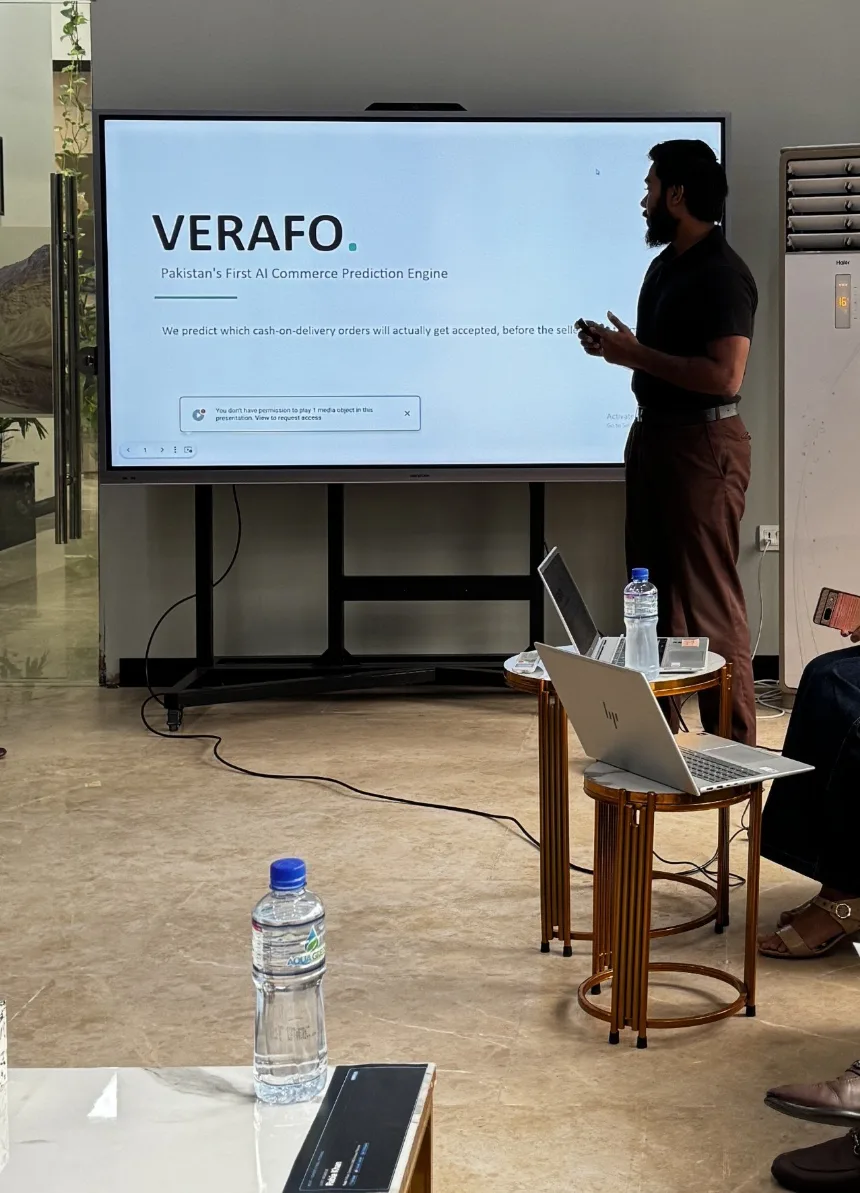
A Verafo presentation, with the title slide on screen reading Pakistan's First AI Commerce Prediction Engine.
The title slide, the first time we said it out loud.
Can we know, before we ship, whether a buyer will pay or send it back?

Nobody had the answer

It was not just our problem.

We asked every courier, every tool, every person in the room. The gap was structural. Every seller in the country was guessing at the same moment, with the same information: none.

80%of Pakistani ecommerce runs on cash on delivery
30–40%of those orders are refused at the door
4–5 daysthe cash then sits trapped in courier reconciliation

On those numbers, roughly every third parcel goes out to lose money.

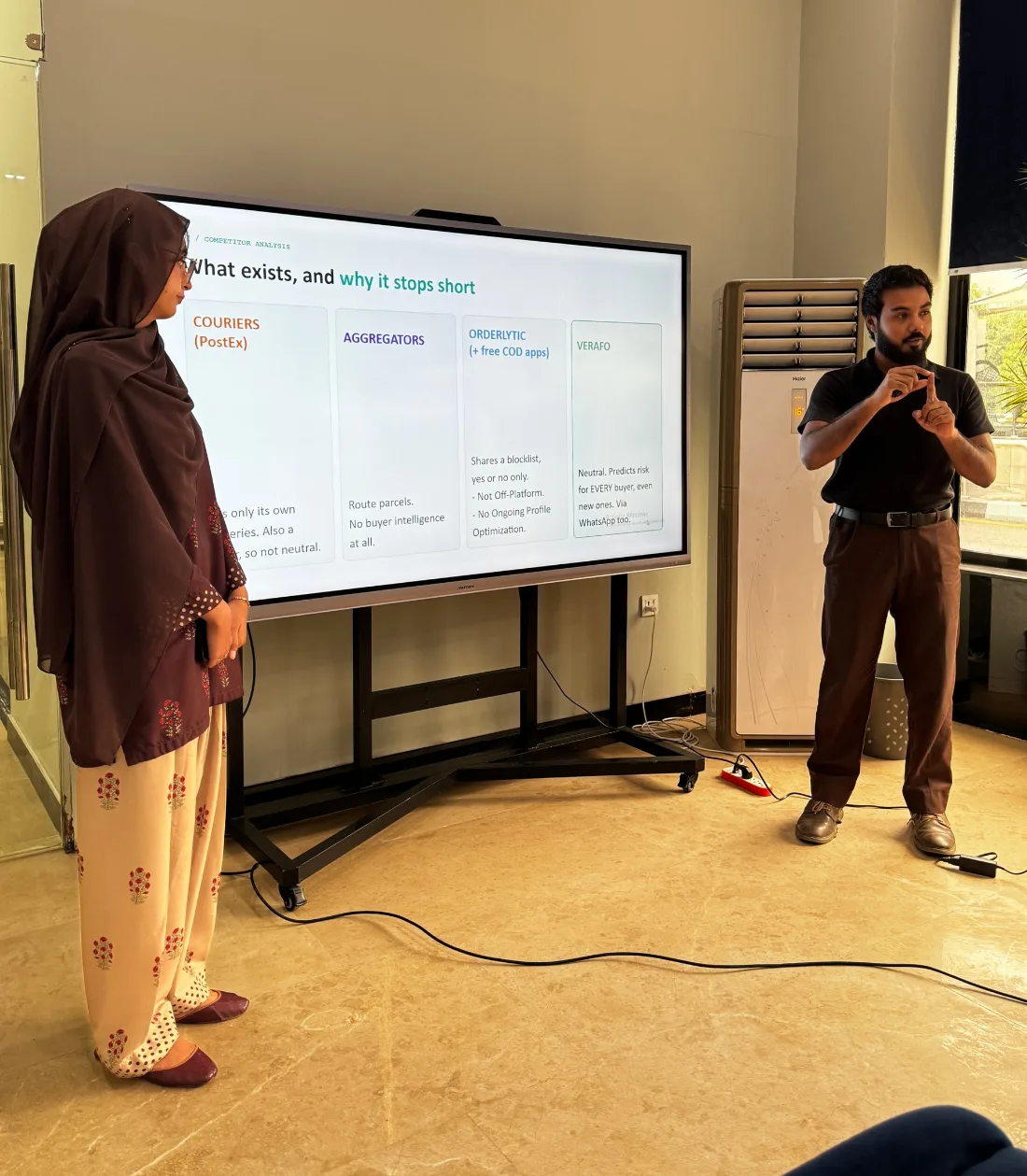
Two people presenting the Verafo pitch, showing a slide titled What exists, and why it stops short.
The competitor analysis from the first pitch.

What already existed, and why it stopped short.

Four kinds of tool had already touched this problem. None of them was in a position to answer it.

The reason is structural, not technical. Every tool that touches a parcel in Pakistan sits inside the transaction: paid to move the box, paid to collect the cash, or paid to sell the payment. None of them is paid to be right about the buyer.

And the one signal that would settle it, whether this phone number has refused a delivery before, sits in a different store's database. Nobody was joining those dots.

Every one of them could tell you what happened to a parcel. None of them could tell you what would happen to it. That is the difference between a report and a prediction.

What was already there

  • Couriers route their own parcels, and they are a party to the sale. Not neutral.
  • Aggregators move parcels and carry no intelligence about the buyer at all.
  • Blocklist apps share a yes or no, for buyers somebody already lost money on.

What was missing

  • Something neutral. Not a courier, not a lender, not a payment processor.
  • A prediction rather than a blocklist: a verdict for a buyer nobody has seen yet.
  • Something that keeps learning every time an outcome comes back.

So we built one.

Verafo reads the phone number on an order, resolves it against a buyer graph built from every connected store, and returns a verdict before payment methods render at checkout.

It works on the first order, for a buyer nobody has ever seen, and it sharpens every time a parcel is accepted or refused.

It is not a courier, not a lender and not a payment processor. That restraint is the point. A party with no delivery revenue has no reason to shade the score.

Then it stopped being just ours.

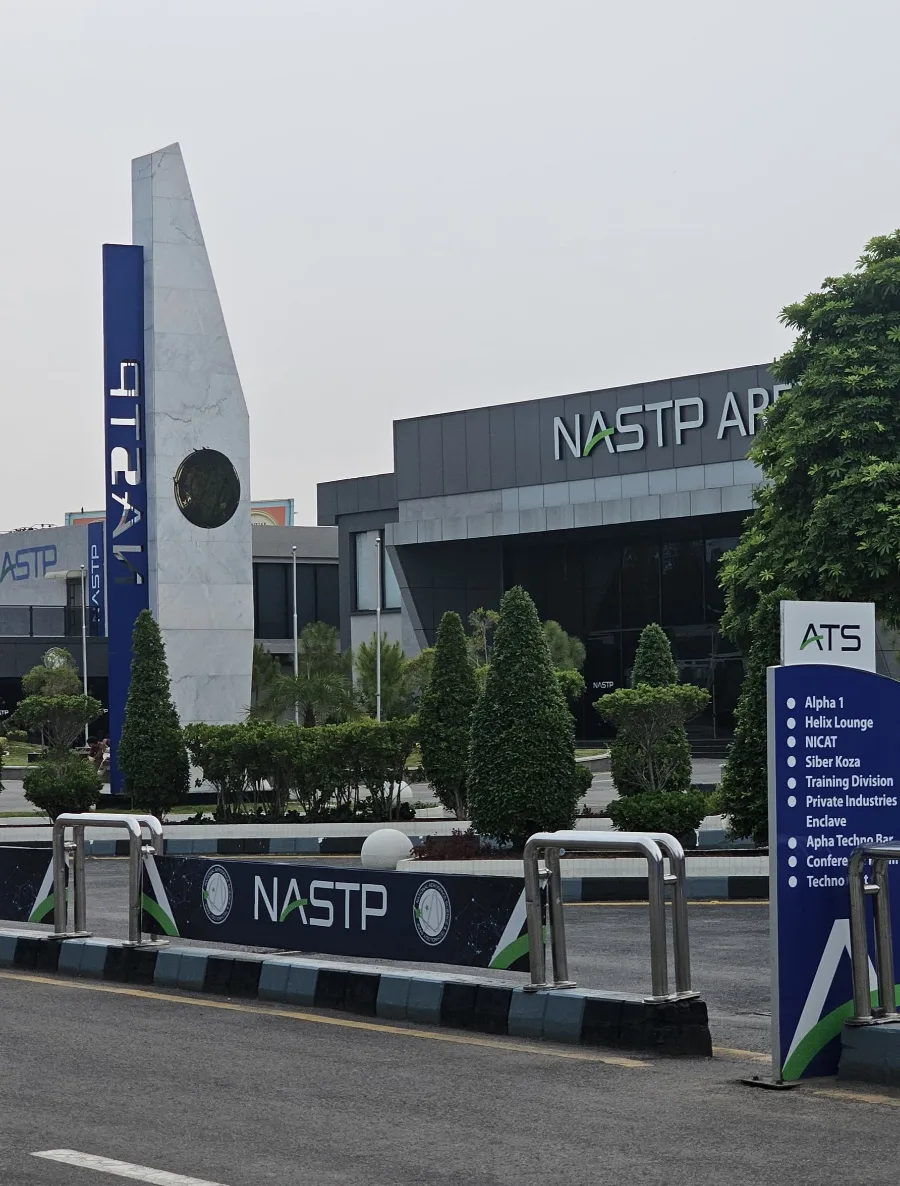
Out of more than a thousand applicants, Verafo was shortlisted among 66 to pitch in the final round of NICAT Cohort 08 at NASTP Alpha, in front of judges who have built and scaled million-dollar companies themselves.

Today it runs in production on 300+ Pakistani brands, with more than PKR 10 crore saved from returned orders.

We are live. And we are just getting started.

The NASTP Alpha campus in Islamabad, where the NICAT Cohort 08 final round was held.
NASTP Alpha, Islamabad.

This one is for every seller
shipping blind.

If you run an ecommerce brand in Pakistan, this was built for you.